Our Biomechanics Analysis gives the rider an opportunity to view and assess their riding from a completely novel point of view. The rider will be filmed from the back and from the side, the footage will be viewed in Slow Motion and every aspect of rider symmetry will be explored.
In harmony with your horse.
As riders we all want our horses to be as happy and comfortable as possible. If you are crooked in the saddle your horse will learn to compensate for your crookedness; he will reorganise himself in a way that allows him to carry your uneven weight. Every time you ride, your horse is responding to your weight distribution and patterns of asymmetry will build up over time.
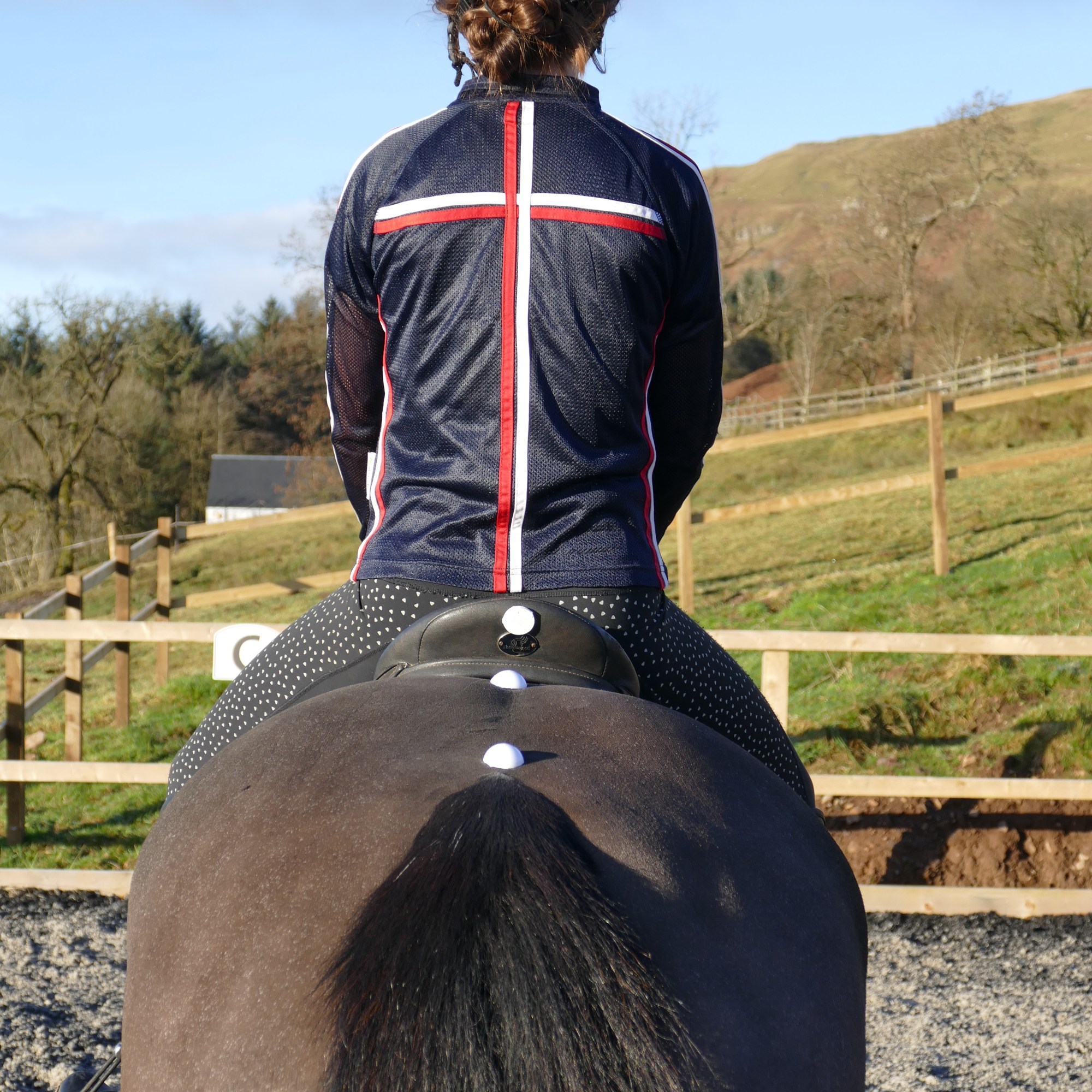

Who doesn’t love to watch footage of their latest dressage test or cross-country round? You will find the Equine Biomechanics footage equally mesmerising, but from an entirely new perspective. Using the technology Emily can identify any asymmetries, and work through the solutions with you.
Frequently observed asymmetries:
- Dropping a shoulder
- Collapsed hip
- Twisting of upper body to inside or outside
- Leaning forward
- C curve of the upper body
- Gripping more with one leg
- Collapsed hip resulting in uneven legs
- Saddle slip
- Leaning to the inside
- Head tilt
- Pelvic tilt
Any or all of the above can be identified using the technology. And together we can work to resolve them.
The video footage will be sent to you within a day of your session. You can then watch it again (and again and again!) and, together with the analysis, you can use it to inform your future training. We believe you and your coach will find it useful in taking you to the next level of riding.
Most riders find it beneficial to combine the Rider Biomechanics Analysis with the Rein Contact Analysis. Often, an asymmetry that is apparent in the filming will be reflected in the rein contact.
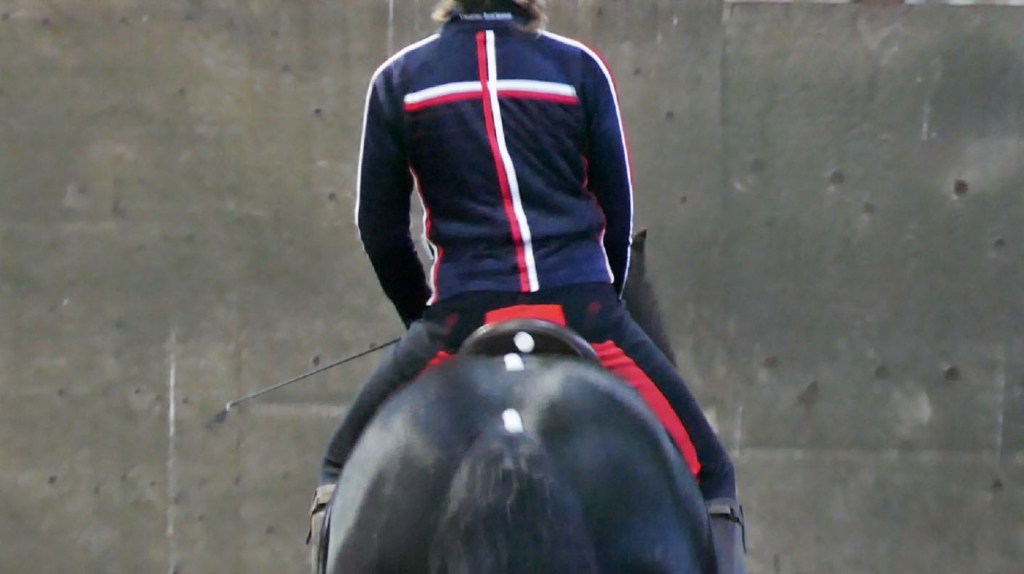
The above photo is not posed.
This rider’s right leg felt like it was unstable and dangly. She knew something was wrong but couldn’t work out what was going on or what to do. You can see she has a collapsed hip and her right leg and knee are not engaged. After a couple of biomechanics sessions she is feeling much better.
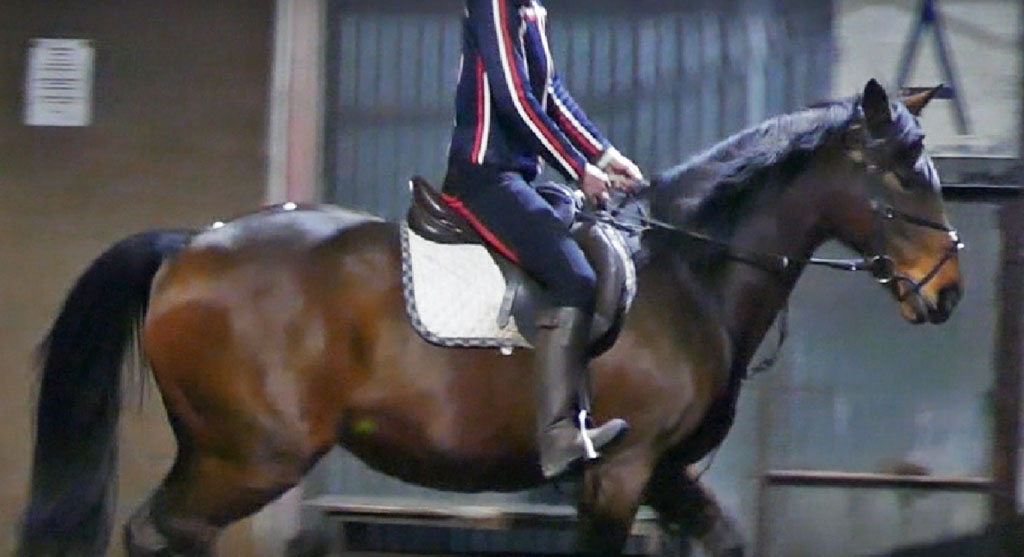
Filming in super-SloMo showed this rider what she is doing in the canter transition. We could clearly see that when she asks for canter she puts too much weight into her heel, resulting in her lower leg coming forward, making it more difficult for the horse to come through from behind.
 Equine Biomechanics Scotland